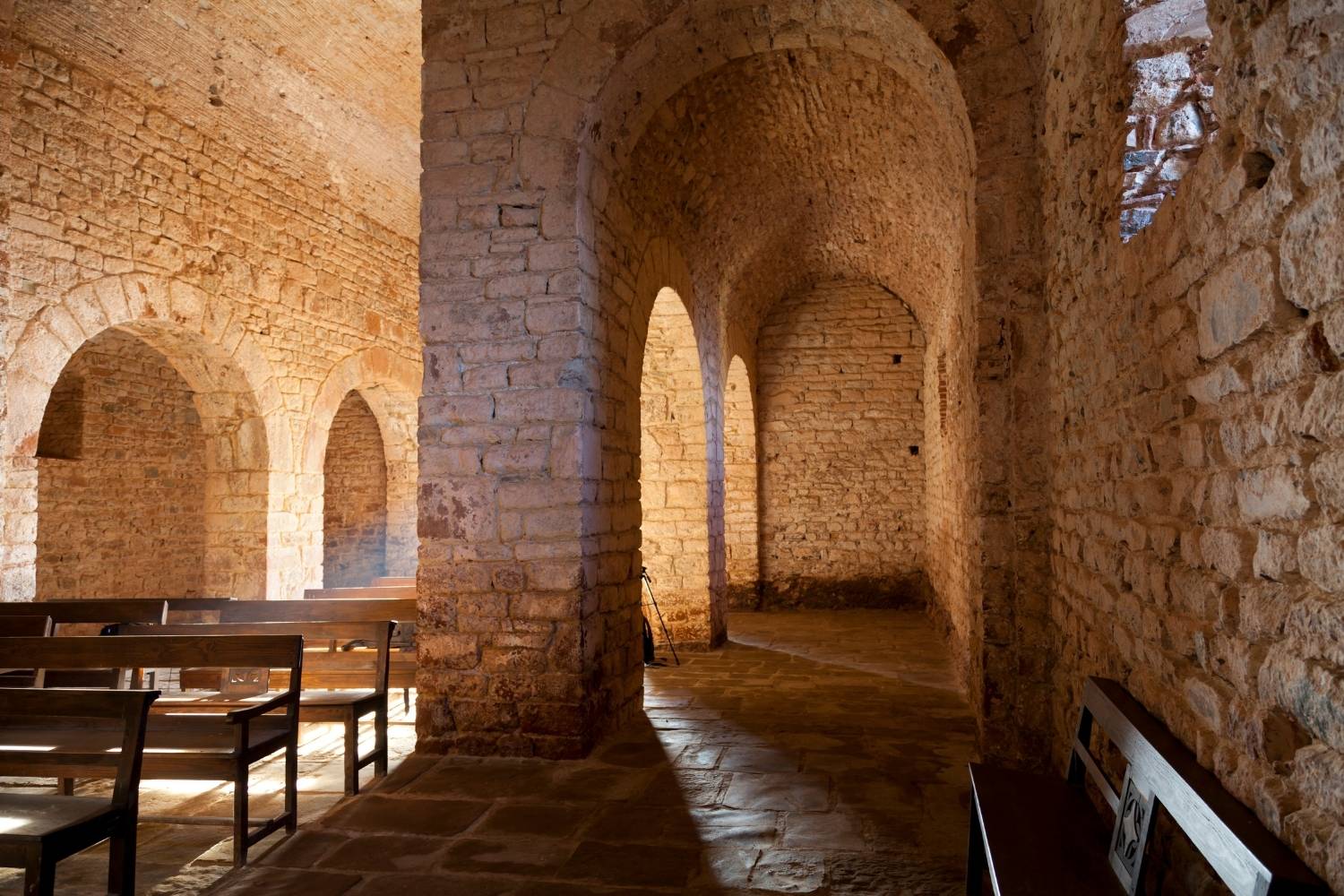
In the heart of the French valleys, some monastic vineyards have survived the centuries thanks to the meticulous care of the monks. It is said that, as early as the XIIᵉ century, abbeys preserved rare vines and nurtured them like living treasures.
In just a few minutes, discover how monks and the cultivation of vines in the Middle Ages transformed viticulture: from their innovative techniques to the transmission of precious knowledge, their influence lives on in our modern vineyards.
Why monks were interested in vines
The religious and sacramental dimension of wine
Wine played a central role in religious life in the Middle Ages. Used for the Eucharist, it symbolized the blood of Christ and was indispensable for daily ceremonies. Monks had to produce a quality wine to guarantee both the purity of the ritual and the prestige of their abbey.
The economic needs of monasteries
Beyond the spiritual, viticulture represented an important source of income. Surplus wine could be sold or traded, enabling monasteries to finance their buildings, charities and intellectual activities. Vineyard management thus reflected a long-term economic strategy.
The social and cultural role of abbeys in local communities
Monasteries were centers of knowledge and culture. By cultivating vines, monks shared their agricultural techniques and strengthened ties with local populations. Grape harvests and wine production became moments of cooperation and transmission, consolidating the abbeys' place in social life.
Viticultural innovations introduced by the monks
Vine pruning and cultivation techniques
The monks systematized precise pruning techniques to improve the quality and yield of the vines. They favored methods adapted to different grape varieties and local climatic conditions, laying the foundations for modern viticulture.
Fermentation methods and wine preservation
The monks perfected the fermentation process, using specially adapted vats and monitoring temperatures. They also developed preservation methods, such as ageing in oak barrels, to stabilize the wine and ensure its quality over several years.
Land mapping and soil management
Through careful observation, the monks identified the best terroirs for each grape variety. They enriched and drained the soils, improved irrigation and created detailed plot plans, contributing to rational, sustainable vineyard management.
| Wine-growing aspect | Before the monks' intervention | After intervention by the monks |
|---|---|---|
| Vine pruning | Random, unstructured | Systematic pruning adapted to grape variety |
| Fermentation techniques | Instinctive, irregular | Temperature monitoring and controlled fermentation |
| Wine storage | Limited, often unstable wine | Barrel ageing and stabilization methods |
| Soil management | Poorly organized | Drainage, enrichment and precise mapping |
| Choice of grape varieties | Local, unthinking | Selection according to terroir and yield |
Transmission of knowledge and influence on modern viticulture
Manuscripts and books on viticulture written by the monks
The monks recorded their knowledge in manuscripts detailing pruning, fermentation and soil management techniques. These writings, often illustrated, served as a reference to train subsequent generations and spread best practices throughout medieval Europe.
The influence of abbeys on today's appellations
Many famous appellations have their origins in monastic vineyards. The abbeys structured the plots of land and defined precise terroirs, laying the foundations for what would later become the modern regulations governing Appellations d'Origine Contrôlée.
Heritage of grape varieties and traditional methods
The monks preserved rare grape varieties and passed on ancestral techniques still used today. Pruning, irrigation, blending and fermentation methods owe much to careful observation and monastic experimentation.

Case studies of famous monasteries
Cluny Abbey and its vineyard management
Founded in the 10th century, the Abbey of Cluny is an emblematic example of monastic organization applied to the vine. The monks developed a network of vineyards across several regions, standardized pruning and vinification techniques, and implemented rigorous plot management. Their approach served as a model for many other European monasteries.
Saint-Hilaire Abbey and Limoux wine
Saint-Hilaire Abbey in the Aude region of France is famous as one of the cradles of sparkling wine, the ancestor of Limoux crémant. The monks experimented with secondary fermentation in the bottle and improved preservation methods, leaving a legacy that is still visible in local viticultural practices.
Benedictine and Cistercian monasteries in Europe
The Benedictine and Cistercian orders spread their viticultural knowledge throughout Europe, from France to Germany and Italy. They introduced innovations adapted to each terroir, created soil maps and cultivation techniques adapted to the climate, consolidating their central role in the history of European viticulture.
The legacy of monks in modern vineyards
Monks and the cultivation of vines in the Middle Ages had a profound impact on viticulture. Their religious role dictated wine quality, their technical innovations transformed cultivation and preservation, and their transmission of knowledge shaped the practices still used today.
Exploring these historic vineyards and visiting winegrowing monasteries helps us understand the living legacy of monks in our modern glassware.