On each bottle of wine, intriguing letters: AOC, AOP, IGP. These acronyms influence the price, quality and origin of the wine. But what do they really mean? Behind these designations lies a complex system for protecting terroirs and guaranteeing quality. Understanding the differences between them will help you choose the right wine and appreciate the richness of France's winegrowing heritage. In this article, we decipher these labels to help you buy, taste and understand your wines with confidence.
Why do designations exist?
Appellations were created to protect the link between a wine and its terroir. They guarantee consumers a precise geographical origin and recognized know-how.
A history of protection
At the beginning of the 20th century, wine fraud was on the increase. In 1935, France created theAOC (Appellation d'Origine Contrôlée). The aim: to control production and preserve the reputation of wine-producing regions.
European recognition
The European Union then harmonized designations. This gave rise to the PDO (Protected Designation of Origin) and PGI (Protected Geographical Indication) labels, now recognized throughout Europe.
What is an AOC wine?
TheAppellation d'Origine Contrôlée is a very strict French label. It guarantees that every stage of the wine-making process (cultivation, vinification, bottling) takes place in a defined geographical area.
Rigorous criteria
To obtain AOC status, a wine must comply with precise specifications:
- Authorized grape varieties
- Limited yield
- Growing and winemaking techniques
- Tasting and conformity control
Emblematic examples
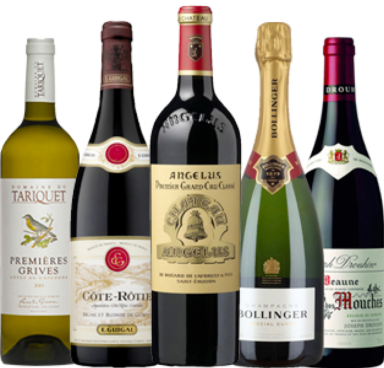
Bordeaux appellations, Chablis or Côte-Rôtie illustrate the excellence of the AOC system. Each region expresses a strong identity, reflecting its climate, soil and traditions.
What is a PDO wine?
TheAppellation d'Origine Protégée is the European version of the AOC.
Introduced in 1992, it protects the product name in all EU countries.
AOC and PDO: what are the differences?
The AOP uses the same criteria as the AOC, but on a European scale. In France, the two labels still coexist:
- AOC is the national appellation.
- PDO is its official European recognition.
In practical terms, a French AOC wine is also an AOP wine, but not all European AOP wines are AOC.
What is a PGI wine?
Protected Geographical Indication gives producers greater freedom.
It guarantees a link with a region, without imposing overly strict rules.
A more flexible philosophy
PGI wines must come from a defined area, but :
- Grape varieties can be varied.
- Winemaking methods are freer.
- The volumes produced can be higher.
Examples of recognized PGIs
Pays d'Oc wines, Val de LoireMediterranean or Comté Tolosan wines.
They're often accessible, modern and innovative.
Comparison table: AOC vs PDO vs PGI
| Criteria | AOC | PDO | PGI |
|---|---|---|---|
| Protection level | National | European | European |
| Link with the terroir | Very strong | Very strong | Moderate |
| Specifications | Very strict | Very strict | Flexible |
| Winegrower's freedom | Low | Low | High |
| Examples | Médoc, Chablis | Champagne, Sancerre | Pays d'Oc, Mediterranean |
What's best for your taste and budget?
For lovers of tradition
AOC/AOP wines appeal to those seeking the authenticity of terroir. They reflect the history, culture and ancestral know-how of a region.
For the curious and explorers
IGP wines offer a freer playground. They allow you to discover original cuvées at affordable prices, perfect for everyday use.
Impact on price
The controls and requirements of AOC/AOP often increase costs. PGI wines, which are more flexible, are generally less expensive, but can be full of surprises.
The future of appellations: tradition and innovation
The world of wine is changing. Producers need to adapt their grape varieties and practices to climate change. Some are moving beyond the framework of appellations to experiment, creating a new category: wines without geographical indication (VSIG). Consumers, meanwhile, are looking for greater transparency and sustainability. Labels will have to evolve to maintain their credibility while adapting to modern expectations.
FAQ: everything you need to know about wine labels
Does PDO replace DOC?
No. In France, the two coexist. AOP is the European version of AOC.
Are PGI wines of inferior quality?
Not necessarily. They are simply freer in their production.
How do you know whether a wine is AOC or AOP?
Look at the label: it's right next to the name of the region.
Does AOC guarantee better taste?
It guarantees typicity and authenticity, not taste preference.
AOC, PDO, PGI: understanding for better tasting
AOC, AOP and IGP labels are much more than just acronyms. They tell the story of a terroir, a know-how and a passion. AOC and AOP defend tradition, while IGP encourages creativity. The best choice depends on your tastes, your curiosity and your tasting moments.