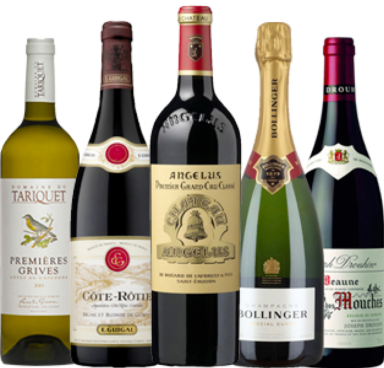
The price of wine always intrigues wine lovers and the curious alike. Why is wine expensive in some bottles, and much more affordable in others? The contrast between inexpensive and top-of-the-range wines raises many questions. Behind every label lie complex factors that directly influence the price of wine. Understanding these differences will not only help you make better purchases, but also enable you to appreciate the true value of a bottle. Let's find out why wine prices vary so much, and what justifies these differences.
Terroir and region of origin
A wine's terroir plays an essential role in determining its price. Climate, soil quality and exposure of the vines directly influence the taste and rarity of the wine. A recognized appellation, with a long history and a strong reputation, adds even more value to the production.
Let's take a concrete example: a Bordeaux from Pauillac, a prestigious Médoc appellation, will always sell for more than a red wine from Languedoc. And yet, some Languedoc estates produce vintages of remarkable quality. The difference lies in the international recognition of the Bordeaux terroir and its historic image.
In short, the appellation wine price reflects the unique combination of terroir, climate and reputation. This is often the first factor that explains why two very different wines don't cost the same.
Grape variety and rarity
The grape variety plays a decisive role in the value of a wine. Some grapes, like Pinot Noir, are delicate to grow and require ideal conditions. Conversely, more robust varieties, such as Grenache, offer greater consistency and lower production costs.
In Italy, for example, Sagrantino de Montefalco is rare and difficult to vinify. Its price naturally soars due to its low production. On the other hand, international grape varieties such as Merlot enable more affordable production, without sacrificing quality.
The choice of grape variety and its availability explain in large part why the price of wine can vary so much from one bottle to the next.
The winemaker's know-how and production methods
The price of wine is not simply a question of terroir and grape variety. The role of the winemaker is central. Producing an artisanal, organic or biodynamic wine requires unique know-how and daily attention.
So, whether it's a cheap wine or a top-of-the-range one, the difference in price is often reflected in the work and expertise invested by the winemaker.
Wine ageing and maturing
A wine aged for several years in barrels and then in the cellar is logically more expensive than a young wine put on sale a few months after the harvest.
Thus, the price of wine often reflects the time and investment required to obtain a bottle of exceptional quality.
Supply, demand and speculation
The wine market works like any other: supply and demand strongly influence price. Rare wines or wines from exceptional vintages quickly become sought-after, driving up their value. Grand crus classés and Parker-rated wines are emblematic examples: their rarity and reputation attract collectors and investors alike.
So investing in wine can drive up the price of a bottle simply by virtue of its popularity and limited availability. Speculation and international demand often explain why some wines reach new heights, even without changing their intrinsic quality.
Ancillary costs: logistics and distribution
In addition to production costs, the price of wine also includes many other ancillary costs. Transport, storage, taxes and distributor margins all have a direct impact on the final price.
Wine costs are not limited to the quality of the grapes or the expertise of the winemaker. Distribution, storage and taxes also explain why two identical wines can have very different prices depending on the point of sale.
Summary: why does the price of wine really vary?
- The terroir and reputation of an appellation.
- The rarity and complexity of grape varieties.
- The winemaker's unique know-how.
- Ageing and breeding.
- Demand, speculation and image.
- Ancillary distribution costs.
The price of wine is never a matter of chance. It's the result of a subtle blend of nature, know-how and the market. Rather than looking for the most expensive or the cheapest wine, it's better to ask yourself what you're really looking for: a wine for immediate pleasure, a wine for laying down, or a collector's cuvée.