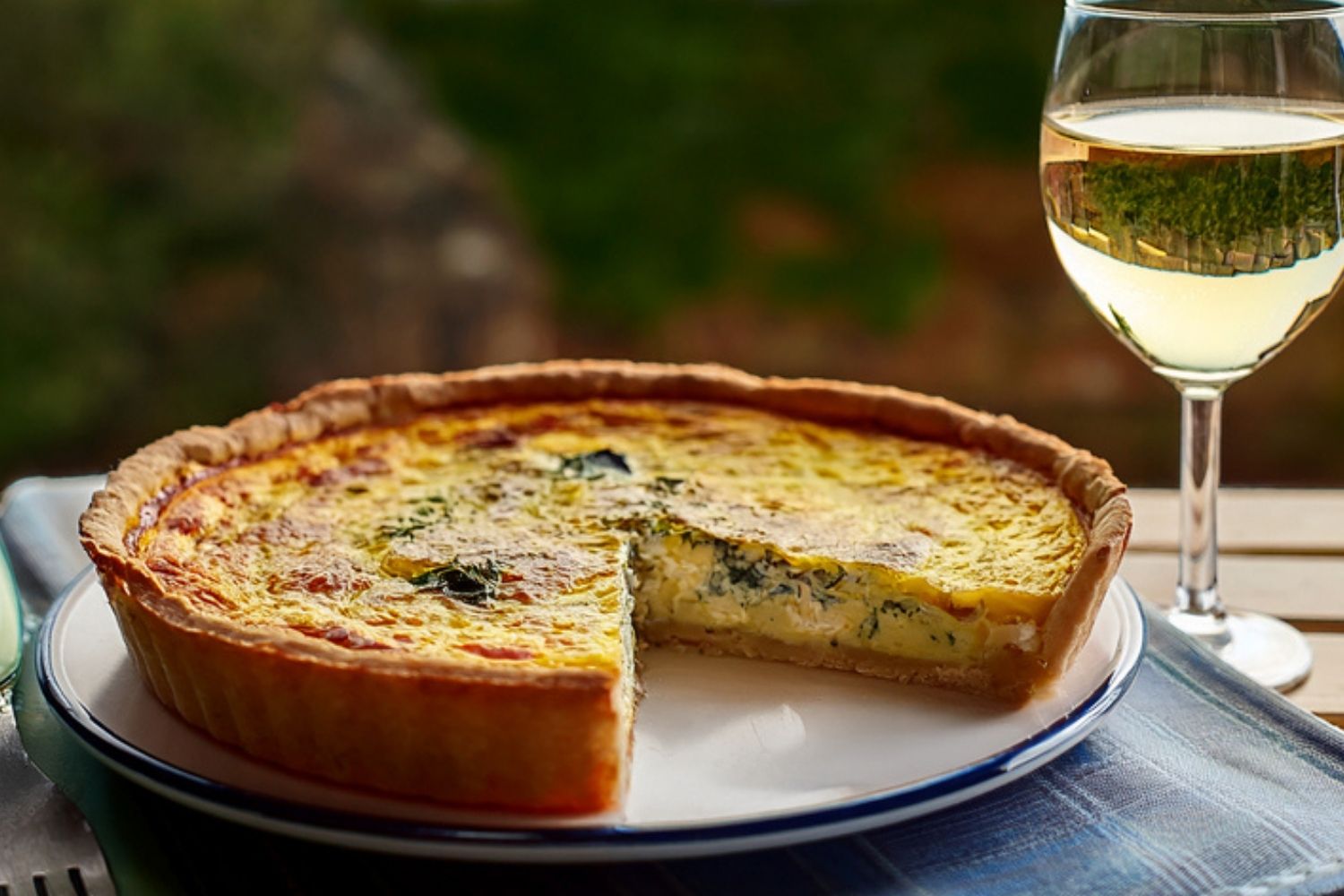
Quiche Lorraine isn’t just a French classic—it’s a dish that combines simplicity, elegance, and indulgence. But to truly enjoy it, you need to know how to prepare it perfectly and pair it with the right wine. In this article, we’ll explore the history of Quiche Lorraine, its traditional recipe, and the best food-and-wine pairings, so that every bite becomes a culinary delight.
The History and Origins of Quiche Lorraine
Quiche Lorraine originated in Lorraine, a historic region in northeastern France, where local ingredients such as eggs, crème fraîche, and bacon bits naturally gave rise to this savory tart.
Originally, quiche was a simple, hearty peasant dish served at family meals. Over time, it has gained recognition as a gourmet dish and is now a staple on fine-dining menus, while remaining easy to prepare at home.
The traditional ingredients are shortcrust pastry, bacon bits, eggs, and cream. Some variations include cheese, herbs, or vegetables, but the classic recipe remains the best starting point for a successful wine pairing.
Recipe for the Perfect Quiche Lorraine
Ingredients (serves 6)
- 1 shortcrust pastry
- 200 g smoked bacon bits
- 3 eggs
- 25 cl heavy cream
- 10 cl of milk
- Salt, pepper, nutmeg
Preparation
- Preheat the oven to 180°C.
- Press the dough into a pie pan and prick the bottom with a fork.
- Sauté the bacon bits in a dry pan until lightly browned.
- In a bowl, combine the eggs, cream, milk, salt, pepper, and nutmeg.
- Spread the bacon bits over the dough and pour the mixture on top.
- Bake for 30 to 35 minutes, until the filling is golden brown and set.
Wine pairings for Quiche Lorraine
Why choosing the right wine is crucial
Quiche Lorraine combines cream, eggs, and bacon; therefore, the wine should balance the richness, enhance the flavors, and not overpower the delicate filling.
Recommended white wines
- Alsace Riesling: crisp and fruity, it balances the cream.
- Pinot Blanc: smooth and floral, it pairs well with pasta and bacon.
- Light Chardonnay (Burgundy or Jura): round on the palate but not overly oaky, perfect for its melt-in-your-mouth texture.
Light red wines
- Light Pinot Noir (Alsace, Burgundy): subtly fruity and low in tannins, it complements the bacon bits without weighing down the palate.
- Gamay (Beaujolais): fruity and smooth, perfect with a quiche served warm at brunch.
| Wine | Dominant flavor | Why it works |
|---|---|---|
| Riesling | Fruity, tangy | Balances the cream |
| Pinot Blanc | Sweet, floral | Goes well with the dough |
| Light Chardonnay | Round and light | Complete the filling |
| Light-bodied Pinot Noir | Fruity, low in tannins | Add the bacon bits |
| Gamay | Fruity and smooth | Perfect for brunch or a light meal |
Quiche Variations and Wine Pairings
- Vegetable or cheese quiche: opt for a fruitier white wine (Sauvignon or Chenin from the Loire).
- Mushroom quiche: pair it with a Chardonnay or a light Pinot Noir.
- If the quiche is very creamy or cheesy, choose a full-bodied white wine to cut through the richness.
- Cut the quiche into even slices and serve it warm.
- Serve with a green salad for a refreshing contrast.
- Serve the wine in a glass suited to its type: a balloon glass for white wine, a light tulip glass for red wine.
Frequently asked questions
What wine goes well with a classic quiche lorraine?
A dry Riesling or Pinot Blanc is the best choice.
Can you pair red wine with quiche?
Yes, but opt for a light, low-tannin wine like Pinot Noir or Gamay.
Do the cheese-based variations change the pairing?
Yes, you need a more full-bodied white wine or a fruity red to balance out the richness.
Conclusion
Quiche Lorraine, simple in appearance, truly comes into its own when paired with the right wine. The secret lies in the simplicity of the traditional recipe, the selection of well-balanced wines, and attention to detail in both cooking and serving.
To fully enjoy this French classic, try out different pairings, see how your taste buds respond, and above all, share the experience over a glass of good wine.